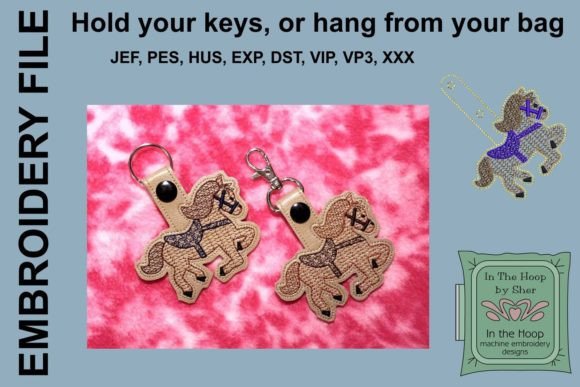
The Horse Key Fob Embroidery Design: A Practical Review
As a designer who’s worked with countless embroidery files for real client projects and my own shop products, my first question about any new design is always: how will it actually perform? Today, I’m looking at the Horse Key Fob embroidery design from a practical standpoint, thinking through where it shines, where it might need careful handling, and what kind of finished products it will elevate.
First Impression: A Solid, Classic Motif
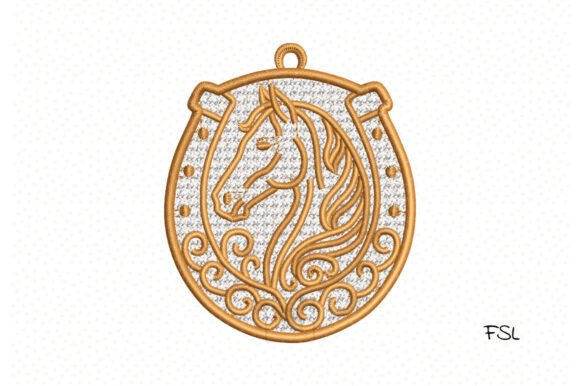
Right off the digital preview, the Horse Key Fob design presents itself as a classic, clean motif. It has that friendly, approachable personality—not overly detailed or majestic, but confident and recognizable. This isn’t a hyper-realistic portrait; it’s a decorative pattern built for function. The shape feels naturally contained, which is ideal for a key fob’s defined space. The layout suggests it would stitch out with clear boundaries, making it a reliable choice for crafters who need a design that looks professional without requiring excessive tweaking.
The mood it creates is nostalgic and earnest. It doesn’t scream “luxury” or “ultra-modern”—it speaks to a genuine appreciation for the theme. This visual personality means it’s going to fit beautifully into projects aimed at horse lovers, for personalized gifts, or as part of a consistent line of equestrian-themed products in a small shop.
Where This Design Naturally Belongs
In my mind, I immediately start placing it onto real products. A custom embroidered key fob is the obvious and perfect home. But its utility extends far beyond that. I’m envisioning it stitched onto the corner of a canvas tote bag for a barn or stable gift shop—a subtle branding element that adds value. It would be charming on a child’s sweatshirt or baby blanket, given its friendly outline. Consider it for a kitchen towel or apron in a horse-loving household, or as a simple, elegant patch on a cap.
For creative entrepreneurs, this design is a versatile digital embroidery file asset. It could anchor a whole series of boutique merchandise: think embroidered pillow covers for a nursery, tea towels for holiday gifts, or even small motifs on the sleeve of a custom apparel piece. Its contained size makes it excellent for commercial embroidery projects where you need quick, repeatable stitching that doesn’t overwhelm the garment.
Performance in Real-Life Embroidery Situations
Let’s talk about stitching it out. I’m picturing a real scenario: preparing a batch of embroidered tote bags for a craft fair, with this horse design as the focal point. On a sturdy canvas bag, with proper stabilizer, I anticipate it will stitch cleanly. The likely use of satin stitches for outlines and fill stitches for the body should create a satisfying, tactile result that customers love in a handmade product.
For apparel, like a sweatshirt or t-shirt, success depends on fabric texture and stabilizer choice. On a standard cotton tee, it should look great. On a stretchy or thin fabric, you’d need to be meticulous with your stabilizer to prevent puckering, especially if any areas have higher stitch density. This is not a design I’d casually run on a delicate silk blouse—it belongs on more robust, everyday materials.
One of its strongest applications might be as an embroidered patch. Stitched onto felt or twill and then applied to a jacket or backpack, it would hold its shape perfectly and become a durable, giftable item. For baby embroidery on blankets or bibs, its friendly theme works, but always test on scrap fabric first to ensure the stitch count isn’t too dense for the soft, often textured fabric.
Careful Use on Challenging Surfaces
Every design has its ideal matches and its tricky territories. For the Horse Key Fob, I’d proceed with caution on a few fronts. First, curved surfaces like caps. The design’s shape might need slight resizing or careful placement to sit well on the crown’s curve. Second, dark fabric backgrounds. The contrast of thread colors is paramount here. If the preview doesn’t specify, you must test and choose threads that pop against dark denim or black fabric to maintain stitching clarity.
Also, be mindful of very small hoop sizes. While the design seems compact, always confirm the actual dimensions and required hoop size before committing to a tiny item like a key fob itself. Tiny lettering or extremely detailed corners, if present, can be challenging on textured fabrics; inspect the file preview closely. Finally, for products that need frequent washing, like kitchen towels or aprons, a robust stitch structure is key. Test its durability on your scrap fabric with a few wash cycles to ensure it holds up, protecting your product’s value and customer trust.
Impact on Your Project’s Appeal and Value
From a business perspective, using a design like this well affects more than just aesthetics. It influences professionalism and buyer engagement. A cleanly stitched horse key fob on a handmade leather keychain presents as a thoughtful, high-quality item. It boosts the giftability of your product instantly. For an Etsy seller or small shop owner, consistency matters. If your brand leans into rustic, animal-themed, or personalized products, this design can become a reliable part of your lineup, aiding brand consistency.
In a craft business, the finished product’s visual appeal directly ties to perceived value. This design, when executed with attention to thread color and fabric pairing, feels authentic and well-made. It avoids looking generic or machine-made in a cold way; it retains a handmade presentation that resonates with customers. In printable mockups for your digital product listings or as part of your design assets for commercial embroidery, it provides a clear, attractive preview that helps buyers envision the final product.
Practical Designer Notes Before You Stitch
Before you load this file for a real embroidery project, here’s my standard checklist, born from years of both successes and learning moments.
- Always test on scrap fabric first. Use the same material and stabilizer you plan for the final product. This reveals any issues with density or tension.
- Check thread color contrast. Especially for light or dark backgrounds. Don’t assume the preview colors will work on your specific fabric.
- Review the stitch density in your software. Look for any overly dense areas that might challenge delicate fabrics or require heavier stabilizer.
- Confirm the hoop size requirement. Match it to your intended product. A key fob needs a small hoop, but a tote bag might allow a larger one.
- Inspect small details. Zoom in on the file preview. Are there tiny elements that might blend together on a textured fabric like a sweater?
- Test it in black and white mockups. This helps visualize it on both light and dark backgrounds for your product photos.
- Use the proper stabilizer. This is non-negotiable for a clean result on any fabric, from stretchy knits to woven towels.
- Confirm the licensing terms. Before selling finished items or using it in commercial embroidery projects, ensure your use is permitted. This protects your business and respects the designer.
Ultimately, the Horse Key Fob embroidery design is a solid, thematic tool in your toolkit. It’s not a flashy superstar, but a reliable performer that, when paired with the right materials and careful execution, can produce delightful, marketable finished products. It fits a niche beautifully and, handled with a designer’s practical eye, can become a staple in your collection for personalized gifts and small shop merchandise.