Letter D with Heart: A Designer's Review for Real Projects
When I first saw the Letter D with Heart embroidery design, my immediate thought was that it had the kind of quiet charm that often gets overlooked in a sea of more overtly romantic motifs. It’s not a loud declaration; it’s a subtle, elegant whisper. That’s a powerful starting point for any embroidery file meant for personalization.
The Quiet Charm of a Combined Symbol
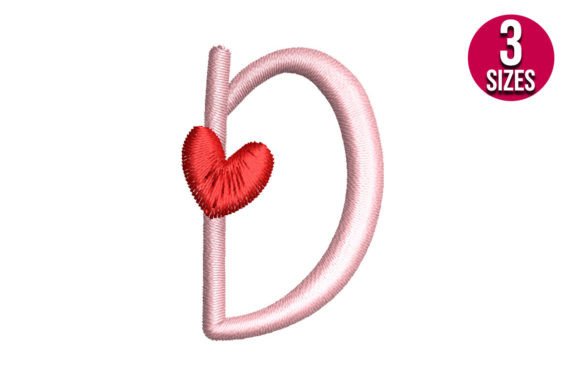
The design cleverly merges two universal symbols—the personal initial and the emotive heart—into a single, cohesive form. The elegance comes from the balance. The letter doesn’t feel overwhelmed by the heart, and the heart isn’t merely tacked on as an afterthought. This creates a visual personality that is both personalized and romantic, but with a refined touch. It doesn’t scream “Valentine’s Day”; instead, it suggests affection, ownership, and care. This makes it incredibly versatile beyond the holiday, suitable for anniversary gifts, wedding party favors, or even boutique branding for a shop with a “D” name.
As a professional, my mind jumps to application. What mood does this create on a finished product? On a crisp white cotton apron, it feels like a heartfelt gift for a home cook. On a soft baby blanket, it becomes a gentle, loving monogram. Stitched onto a navy blue tote bag, it transforms into a stylish, personal accessory. The design’s success hinges on this adaptability. It’s not a novelty; it’s a design asset.
Where This Design Thrives in Your Work
In real-life embroidery situations, the Letter D with Heart finds its home on products where subtlety adds value. Imagine a client requesting a custom embroidered sweatshirt for their partner—this design provides that personal touch without being overly flashy. For Etsy sellers or craft fair vendors, it’s an excellent option for a personalized gift category. It works beautifully on pillow covers for a cozy nursery, kitchen towels for a newlywed, or as a small, elegant patch on a canvas cap.
The level of detail appears manageable. There aren’t overly intricate corners or tiny, fragile lettering sections that would require microscopic hooping. This suggests it should perform reliably across various hoop sizes, likely from smaller 4x4 frames up to mid-size hoops, making it suitable for both small baby items and larger apparel like sweatshirt fronts. However, always check the specific recommended hoop size from the digitizer before loading your machine.
A Practical Scenario: The Boutique Tote Bag
Let’s walk through a scenario. I’m preparing a batch of tote bags for a small shop’s Valentine’s Day promotion. They want something special, but not generic. I choose a high-quality natural canvas and a soft pink thread for the Letter D with Heart. After testing on scrap fabric, I note the stitch density. It seems balanced—not so dense that it stiffens the bag fabric, but substantial enough to look professional. The finished product feels handmade yet polished. A customer sees it and immediately thinks, “This would be perfect for my friend Danielle.” That’s the engagement this design fosters. It’s specific enough to feel custom, universal enough to appeal to many.
Caution Zones: Where to Proceed with Care
No design is perfect for every single application, and a thoughtful review requires honesty about limitations. For the Letter D with Heart, I would approach certain projects with extra preparation.
Texture and Stretch are my first considerations. On very textured fabrics like thick sweaters or some towels, the clean lines of the satin stitch (which I assume forms the letter and heart outline) might get slightly lost. On stretchy fabrics like t-shirts, using a robust stabilizer is non-negotiable to prevent distortion of the heart shape.
Dark Fabric requires a strategic thread choice. A white or light letter on a black background will make this design pop, but you must ensure the fill stitches are dense enough to prevent the dark fabric from showing through and muddying the elegant shape. Always test on a scrap of your actual project fabric first.
The most caution is needed for very small applications. If you’re trying to shrink it down for a tiny corner on a baby sock or a delicate handkerchief, the merged details of the letter and heart might become blurred. The design’s clarity depends on its size allowing each element to be distinct. Also, on curved surfaces like caps, the heart’s symmetrical shape might require careful positioning and hooping to look perfect.
How This Design Impacts Your Product's Appeal
From a business and craft perspective, using a design like this isn’t just about stitching; it’s about the final product’s story. The Letter D with Heart elevates a simple item. A plain tea towel becomes a thoughtful gift. A generic sweatshirt becomes custom apparel. This directly affects product value and customer trust. It shows you’ve chosen a design with intentionality, not just a random graphic.
For brand consistency, if your shop specializes in romantic or personalized goods, this design fits seamlessly into that narrative. Its clean execution results in good stitching clarity on the finished product, which is critical for professionalism. A blurry or poorly defined embroidery can undermine buyer confidence; this design, when stitched well, should look crisp and confident.
Its giftability is high. It’s inherently personal. In a printable mockup for your online listing or in a physical craft fair
Essential Designer Notes Before You Hoop
Before you run this machine embroidery design for a client project or your own small shop product, here’s my practical checklist from the review perspective.
- Scrap Test First: Always stitch it out on a scrap of your intended project fabric. This reveals how the thread colors interact with your material and tests the actual stitch density.
- Contrast Check: Evaluate the design in both light and dark fabric black and white mockups mentally. Does it rely on a stark contrast to be effective? Plan your thread palette accordingly.
- Detail Inspection: Look closely at the digital file preview. How are the connection points between the letter and the heart handled? Are they clean joins that will stitch well, or potential trouble spots?
- Stabilizer Strategy: Match your stabilizer to the fabric. For apparel, you might need a cut-away. For a tote bag, a tear-away might suffice. This is key for preserving the design’s elegance.
- Commercial Use Clarification: If you plan to sell the finished product or use it in commercial embroidery for clients, confirm the licensing terms of the embroidery file. Never assume.
- Application Fit: Honestly ask: Is this for a baby item needing frequent washing? The design should hold up, but consider a durable thread. Is it for a detailed patch? Ensure the edges are clean.
In conclusion, the Letter D with Heart embroidery design stands out as a thoughtfully composed file that translates well from screen to stitch. It offers that sweet spot between specificity and versatility that designers and makers look for. It empowers you to create handmade products that feel both personal and professionally executed. By approaching it with these practical considerations, you can confidently turn this digital embroidery file into a finished product that delights both you and your customer.