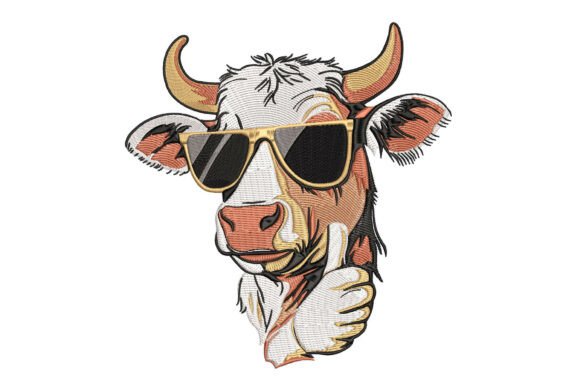
Bull Embroidery: Modern Farmhouse Charm for Craft Fair Success
First Impressions: A Bold, Modern Statement
When reviewing the Bull embroidery design for upcoming craft fair products, the first thing that strikes me is its modern, graphic quality. This isn't a rustic, pastoral sketch; it feels bold and eye-catching. That “trendy makeover” mentioned in the description is spot-on. It carries a sense of confident, contemporary farmhouse style—not overly cute or cartoonish, but rather decorative and strong. This is a premium-looking design that can elevate basic items, making it perfect for the handmade market where visual impact is everything.
Where Bull Will Stand Out in Your Booth
Imagine your booth table: tote bags, aprons, tea towels, caps, and small pouches all laid out for browsing. Bull has the potential to command attention. Its clear, graphic nature makes it easily understandable at a glance, which is critical for capturing a customer’s interest as they walk past. On a solid-color canvas tote bag or a market bag, it becomes a striking focal design. On a crisp white apron, it feels fresh and stylish. For tea towels, especially in natural linen or cotton, it provides that perfect, fresh accent that ties into popular farmhouse kitchen decor.
Bull’s strength is its versatility as both a large focal point and a smaller accent. On pillow covers, it can be scaled up for a dramatic statement piece. On a cap or a small fabric pouch, a smaller version works as a refined, interesting detail. This scalability is key for batch production, allowing you to use the same embroidery file across multiple product types efficiently.
Top Product Recommendations for Selling Bull
- Tote Bags & Market Bags: The design’s boldness is perfect for these larger surfaces. It adds significant perceived value.
- Tea Towels & Kitchen Linens: This is a natural fit given the farm animal category. It feels purposeful and decorative.
- Embroidered Patches: Bull would make an excellent standalone patch. Its graphic clarity holds up well, appealing to customers looking for a unique badge.
- Pillow Covers: Offers a great opportunity for a higher-price-point, decorative home good.
- Aprons: Especially on chef-style or utility aprons, it adds a custom, handmade quality that sells well.
Practical Production & Selling Points
From the perspective of an embroidery business owner producing items for a fair, practicality is paramount. Before running any batch, I always test a new design like Bull on scrap fabric of the exact type I plan to use—be it canvas for bags, terry cloth for towels, or twill for caps. This reveals everything.
You must check thread contrast. On dark fabrics, you might need a bright or light thread palette to maintain its eye-catching quality. Review the stitch density in your embroidery file; dense areas can be challenging on textured towels or thicker fabrics like canvas, requiring the correct stabilizer. For curved surfaces like caps, ensure the design’s proportions are tested in the appropriate hoop size to avoid distortion.
A critical note: Bull’s modern, likely clean lines should hold up well at reduced sizes, but always inspect any tiny details if you plan to miniaturize it for pouches or caps. The goal is to retain clarity. Nothing frustrates a buyer more than a blurry, muddled design on a finished product.
Craft Fair Booth Display Strategy
To maximize Bull’s appeal, create at least one real, physical mockup of it on your best-selling product—say, a high-quality tote bag. Place this sample prominently in your booth. Customers engage with real items; they touch them, examine the stitch quality, and imagine owning them. This tangible sample is far more powerful than any printable mockup in an Etsy listing.
For online sales, like an Etsy shop, Bull will photograph beautifully due to its graphic nature. Ensure your listing photos show it on various products (towels, bags, aprons) to demonstrate its versatility. This directly answers a customer’s question: “What would this look on something I want?”
Designer Notes for a Smooth Production Run
Here’s my checklist before turning Bull into commercial embroidery products for my small shop:
- Test on Scrap: Use the actual fabrics (canvas, linen, cotton).
- Thread & Contrast: Compare thread colors against both light and dark fabric backgrounds.
- Stabilizer Selection: Match the stabilizer to the fabric texture and the design’s stitch density.
- Hoop Size Verification: Confirm the machine embroidery file is optimized for the hoop sizes you use for your standard products.
- Spacing & Placement: Review where it sits on each product type for balanced visual appeal.
- Create a Real Mockup: One finished, sellable item is your best design asset for evaluation.
- Commercial Licensing: Before selling any finished product, confirm your digital embroidery file license permits commercial use. This is a must.
Final Thoughts on Customer Appeal & Value
Bull offers a cohesive brand feel for a maker focusing on modern farmhouse or contemporary rustic styles. In a booth, a cohesive line of products featuring this design—towels, bags, aprons—creates a strong, professional display that tells a story. Customers looking for a handmade gift or a unique kitchen accent will be drawn to its clean, modern execution. It feels intentional and crafted, which boosts the perceived handmade quality and value.
For creative entrepreneurs, from Cricut crafters adding embroidered elements to boutique makers building a brand, Bull is a versatile, sellable asset. Its success hinges on your production diligence: using the right stabilizer, ensuring thread contrast, and presenting it on products where its bold, graphic character shines. By focusing on those practical steps, you can transform this machine embroidery design into a standout craft fair product that not only catches eyes but also convinces buyers to invest in your handmade work.