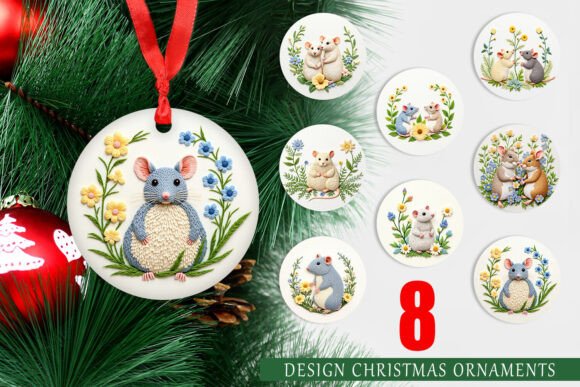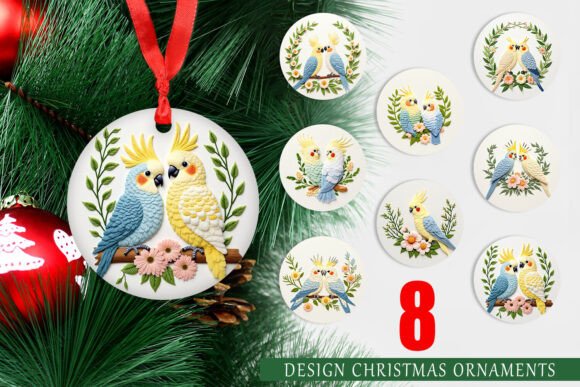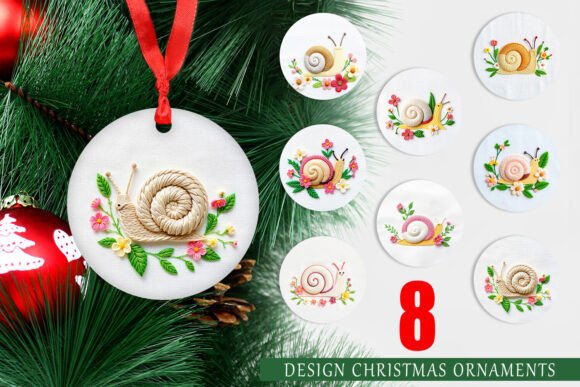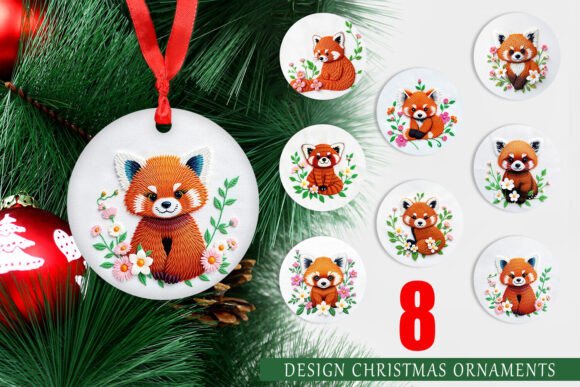
A Designer's Review of Ornament Dog Embroidery
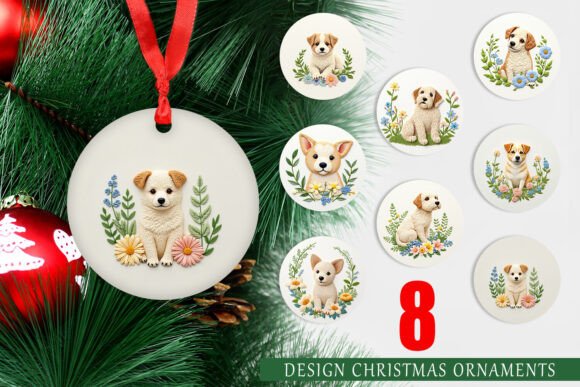
When preparing products for a craft fair booth, every design file needs to earn its place. It must translate from a digital graphic to a physical product that catches a customer’s eye across a crowded market hall. Today, I’m reviewing Ornament Dog Embroidery, a set of eight circular designs, from the perspective of an embroidery designer ready to stock a booth with handmade goods.
First Impression: Festive, Friendly, and Perfectly Scalable
The immediate feel of Ornament Dog Embroidery is festive and approachable. The circular format suggests classic Christmas ornaments, which is a strong, familiar holiday motif. The inclusion of dogs makes it feel personal, charming, and tailored to a specific, passionate customer base—dog lovers. This isn't a generic snowflake; it's a design that tells a little story. For a craft fair, this combination of holiday tradition and personal connection is a powerful starting point. It feels decorative, cute, and has a soft, hand-drawn quality that reads as premium and handmade, not mass-produced.
Where This Design Will Stand Out on the Booth
My booth strategy involves a mix of items: tote bags, aprons, tea towels, caps, patches, pouches, and pillow covers. Ornament Dog Embroidery has versatility, but its best applications will maximize its festive and decorative appeal.
Tote bags and market bags are a top contender. A single, well-placed ornament design on the front of a canvas tote creates a focal point. It’s giftable and functional. For aprons and kitchen towels, these designs could work beautifully as a repeating border or a cluster of ornaments along the hem. The circular shape breaks up the linear fabric nicely.
However, the true standout product might be embroidered patches or small fabric pouches. The 5-inch circular design is an ideal size for a standalone patch, which customers can buy as a quick, affordable holiday accessory. Sewn onto a simple linen pouch, it instantly becomes a gift-ready item for storing holiday treats or small treasures. Pillow covers could also be excellent, especially if multiple ornament designs are grouped together for a festive sampler look.
On caps, the curved surface presents a challenge. A full 5-inch circle might be too large; the design would need to be scaled down. This requires careful testing to ensure the details, especially any tiny elements within the dogs or ornaments, remain clear when reduced.
Practical Production Considerations for Sellers
Turning a digital file into a sellable handmade product requires practical forethought.
The provided specs—8 PNG files at 5x5 inches, 300 dpi—are perfect for creating printable mockups for Etsy listings and for guiding machine embroidery setup. However, as an embroidery designer, I must translate this graphic into an embroidery file. The circular shape and likely illustrative line work mean paying close attention to stitch density. Areas meant to be solid fill will require many stitches, which affects production time and thread usage. On textured fabrics like tea towels, a very dense fill might not look clean.
Small details and lettering are always a concern. If these ornament designs include intricate dog features or tiny text like "Joy" or "Noel," they may become lost or blurry when stitched, especially on thicker fabrics like canvas for tote bags. This necessitates a pre-production test on scrap fabric to check clarity.
For batch production at a fair, consistency is key. The circular format is inherently repeatable. Once I’ve perfected the hoop size, stabilizer, and thread color palette for one product, I can efficiently replicate it. This is crucial for making dozens of tea towels or patches. I would advise starting with a smaller hoop size for patches or pouches to maximize booth inventory.
Critical Steps Before the Fair
- Test on scrap fabric first. Embroider one design on the actual materials you plan to use—canvas, linen, cotton towel.
- Check thread contrast. Especially for dark fabrics, ensure your thread choices make the design pop. A light design on a dark towel needs bright, high-contrast threads.
- Review spacing and scale. Does the design look balanced on the product? On an apron, is it too high or too low? Scaling down for caps requires a separate test.
- Create at least one real, physical mockup. This mockup becomes your best booth sample. Customers touch and see quality through a finished product.
- Compare fabric colors. Offer the design on classic holiday colors (red, green, cream) and neutral bases (natural canvas, gray) to widen appeal.
- Confirm commercial licensing. The description states it’s a printable design. Before selling finished embroidered products, verify your license permits commercial use of the graphic in physical goods.
How This Design Drives Sales and Customer Engagement
At a fair, visual appeal is your first sales tool. Ornament Dog Embroidery, when well-executed, adds significant handmade quality and perceived value. A crisp, clean embroidery on a tea towel feels more valuable than a printed one. It speaks to craftsmanship.
The dog theme creates instant engagement. Customers who love dogs will stop and comment. This gives you a natural conversation opener, which is the heart of craft fair selling. You can discuss their dog, the holiday, and the product's use—building a connection that often leads to a sale.
For brand consistency, if your small shop focuses on pet-themed or holiday items, this design fits seamlessly. A booth display with a cohesive theme—like several products all featuring these ornament designs—looks professional and strong.
Finally, consider online extension. The high-resolution PNGs are excellent for creating Etsy listing photos. A professional photo of the actual embroidered product, alongside a digital mockup showing the design on different items, covers both the digital seller and the handmade product angle.
In conclusion, Ornament Dog Embroidery presents a promising opportunity for craft fair sellers. Its festive, niche appeal can translate into several high-demand products. The key to its success lies not just in the digital file, but in the careful, practical work of the embroidery designer: testing, adapting, and presenting it as a tangible, quality item that customers can imagine in their holiday home. With that groundwork, it has every chance to be a standout in your booth lineup.